BIOL 195D: Biology of Women

Leah Lanier


Birth Control
Matea Sucic, Kiera Stankewich & William Fearey


IVF
Kristina Ayers, Zainab Madan and Alora Ross


Does Birth Control Cause Infertility?
Ruthie Hay and Lilly Shoffner


Understanding PCOS
Samantha Berish and Minah Sadrabadi


Endocrine Disruptors
Matt Snyder and Jack Belbot
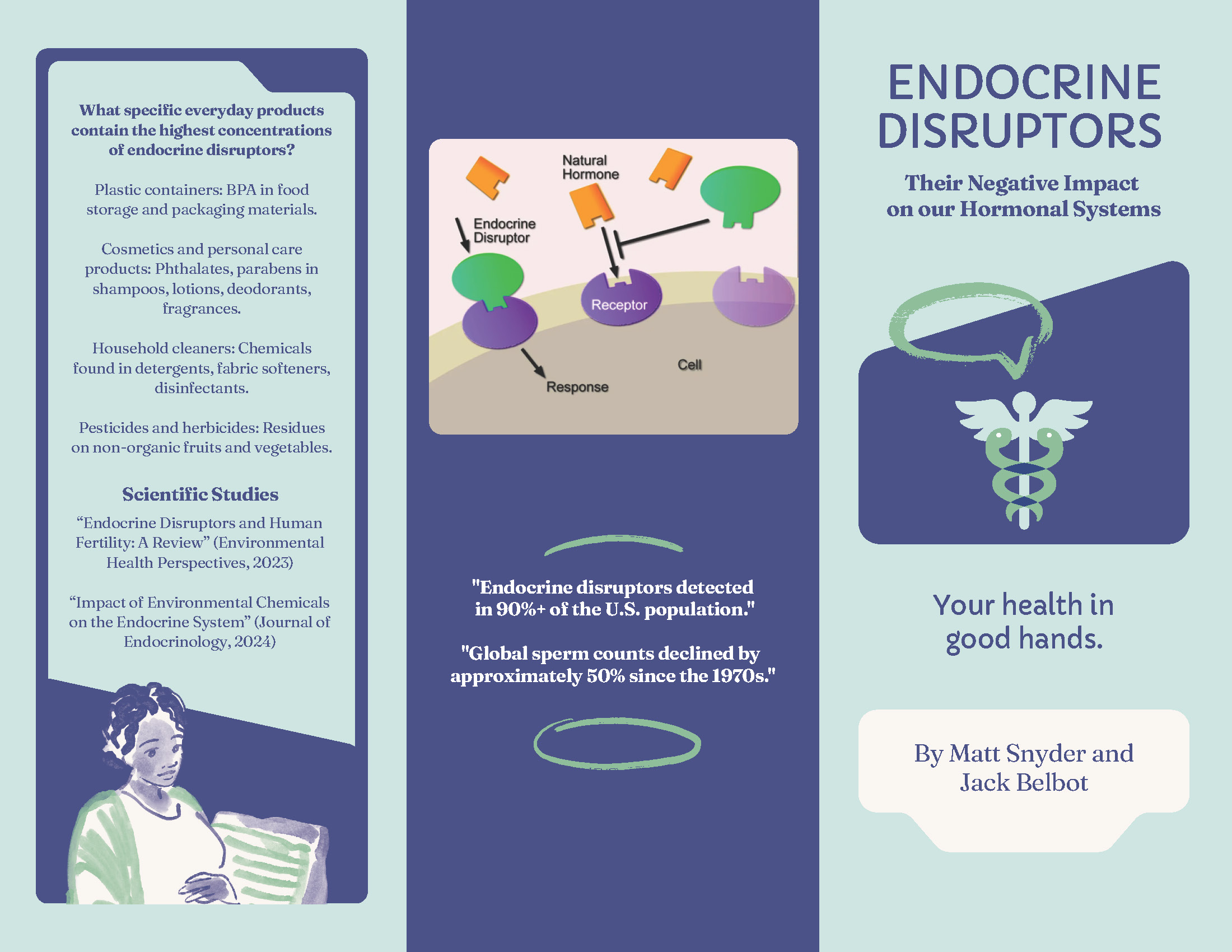
Endocrine Disruptors: Their Negative Impact on Our Hormonal Systems By Matt Snyder and Jack Belbot This trifold highlights the health risks of endocrine disruptors—chemicals that interfere with hormone function. Common sources include: Plastic containers (BPA) Cosmetics and personal care items (phthalates, parabens) Household cleaners Pesticides on non-organic produce Scientific findings show these disruptors are present in over 90% of the U.S. population and are linked to a 50% global decline in sperm counts since the 1970s. The trifold stresses awareness and caution around everyday exposure to these harmful substances. Diagram of hormone disruption (center panel): A simplified diagram showing how endocrine disruptors mimic or block natural hormones by binding to cellular receptors, altering biological responses. Caduceus medical symbol illustration (right panel): A stylized image of a medical caduceus symbol with the phrase “Your health in good hands,” suggesting health advocacy. Illustration of woman reading (left panel): A stylized drawing of a woman holding a book or magazine, reinforcing the importance of consumer awareness and education.
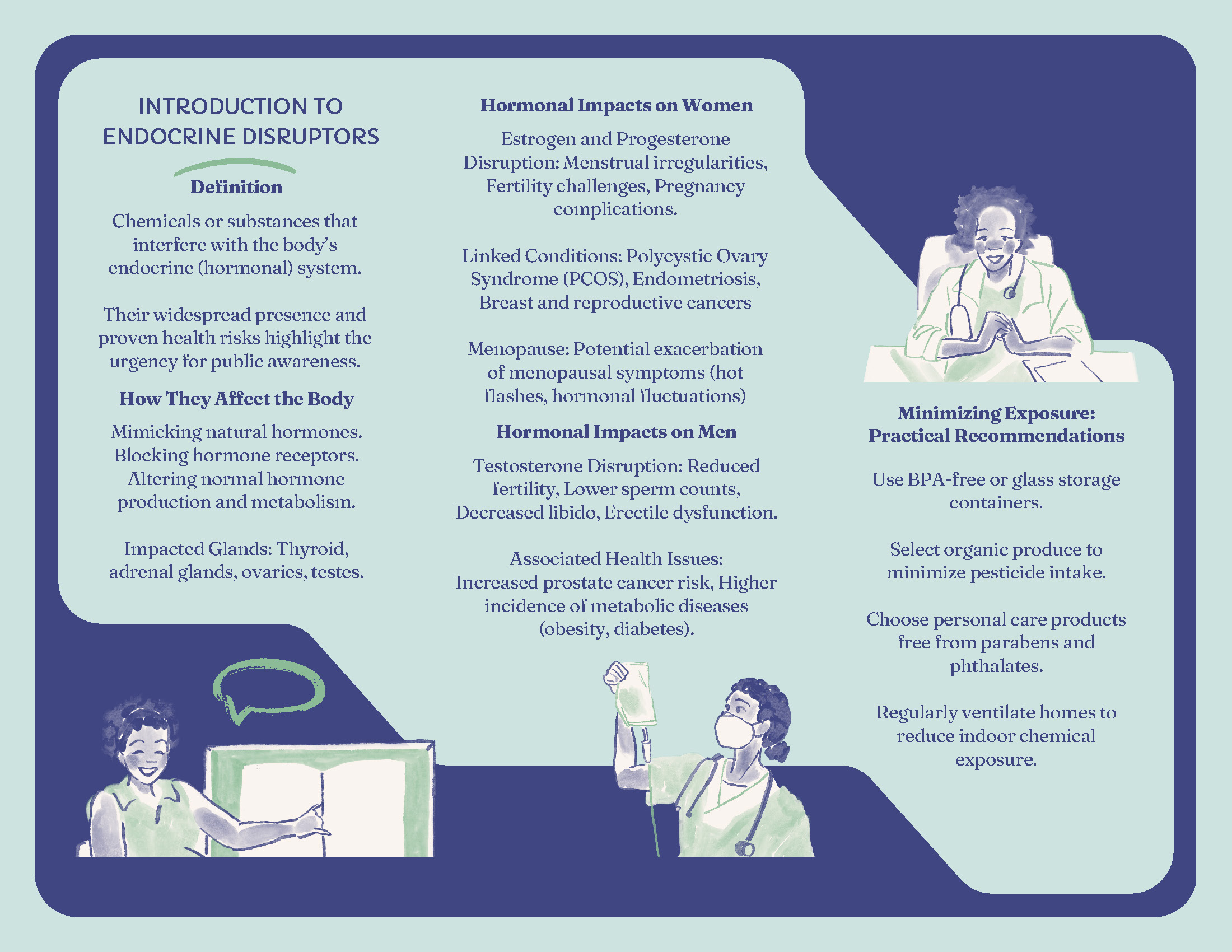
This page explains what endocrine disruptors are and how they affect the body by mimicking hormones, blocking receptors, or altering production. The glands most impacted include the thyroid, ovaries, testes, and adrenal glands. Health Impacts: In Women: Disrupt estrogen and progesterone, causing menstrual issues, fertility problems, pregnancy complications, PCOS, endometriosis, and breast cancer risks. In Men: Lower testosterone, reduced sperm count, decreased libido, erectile dysfunction, increased risk of prostate cancer and metabolic diseases. Practical Ways to Reduce Exposure: Use BPA-free or glass containers Choose organic produce Avoid products with parabens and phthalates Ventilate indoor spaces regularly Bottom left (Child learning illustration): A cartoon-style drawing of a child raising their hand and smiling, representing curiosity and engagement in learning about health. Top right (Female doctor illustration): Illustration of a smiling healthcare provider in a lab coat, suggesting medical support and guidance for hormone health. Bottom center (Masked researcher illustration): Drawing of a person wearing a mask and lab coat, holding a clipboard and a bottle

Maternal Mortalilty Crisis in the U.S.A.
Vivi Reeves, Cat Pettegrove, and Anna Marie Harding


Interviewing WLU Students about Premenstrual Dysphoric Disorder
Martha Afokwa, Jacob Bennett, London Paige