BIOL 195D: Biology of Women

Leah Lanier


Lydia Kendall, Audrey Feng, and Charlotte Welborn
What to Expect When You’re Expecting


Adelaide Kessler, Sally King, Lexi O’Hanlon
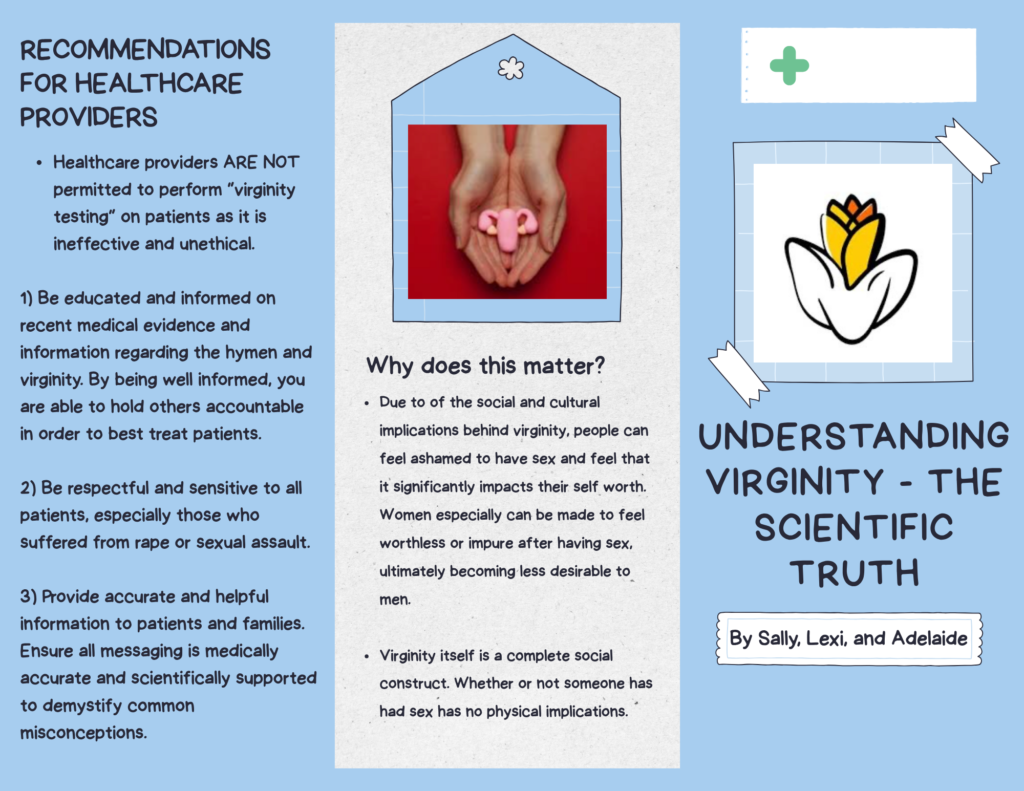
The exterior layout of a three-panel educational brochure with a light blue background. The rightmost panel serves as the cover, featuring a stylized illustration of a white flower with a yellow and orange bud taped to a grid-patterned square. Below the graphic, bold black text reads "UNDERSTANDING VIRGINITY - THE SCIENTIFIC TRUTH," followed by a small decorative label reading "By Sally, Lexi, and Adelaide."

Center Panel: Cultural Impact
The middle panel features a light gray textured column designed to look like a house shape with a small white flower icon at its peak. Inside is a photo of a pair of hands cupping a small, pink clay model of a uterus against a vibrant red background. Below the image, the section "Why does this matter?" explains that societal pressures surrounding virginity can cause shame and impact self-worth, concluding that virginity is a social construct with no physical implications.

Left Panel: Provider Guidelines
The left panel is titled "RECOMMENDATIONS FOR HEALTHCARE PROVIDERS." It states that providers are not permitted to perform "virginity testing" because it is ineffective and unethical. It includes a numbered list advising professionals to stay informed on medical evidence regarding the hymen, remain sensitive to survivors of sexual assault, and provide scientifically accurate information to demystify common misconceptions.
Left Panel: Medical Facts & Trauma Indicators
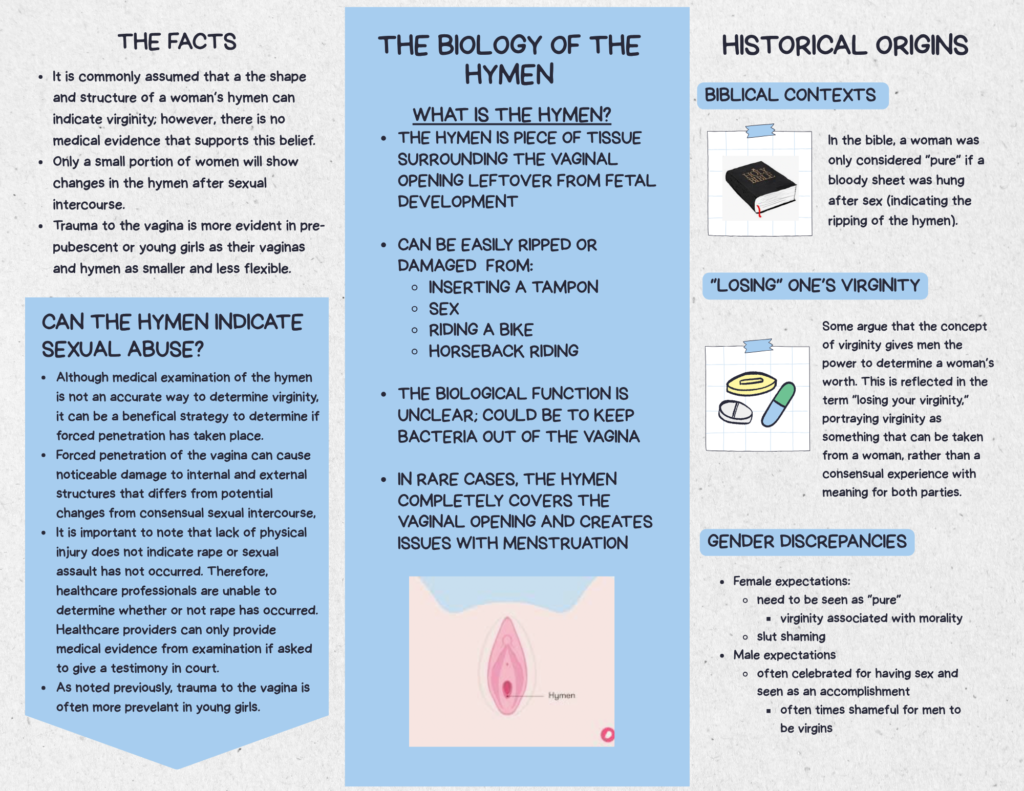
The leftmost interior panel is divided into two light blue sections. The top section, "THE FACTS," states that hymen structure cannot prove virginity and that vaginal trauma is more evident in younger girls. The bottom section, "CAN THE HYMEN INDICATE SEXUAL ABUSE?", notes that while an examination cannot determine virginity, it can help identify forced penetration. It stresses that a lack of physical injury does not disprove rape or sexual assault, meaning healthcare providers cannot definitively determine if abuse occurred without court-requested testimony.

Center Panel: Biological Overview
The central panel, titled "THE BIOLOGY OF THE HYMEN," features a light blue column. The text defines the hymen as a piece of tissue surrounding the vaginal opening leftover from fetal development. It lists everyday activities that can stretch or tear it, including inserting a tampon, sex, riding a bike, and horseback riding. It notes its biological function is unclear but may keep out bacteria, adding that in rare cases it can completely cover the opening. At the bottom is a simplified anatomical illustration mapping the external female genitalia, labeling the location of the hymen.

Right Panel: Historical and Social Context
The rightmost panel, set against a light gray background, explores "HISTORICAL ORIGINS" across three taped-note graphics:

BIBLICAL CONTEXTS: Features an illustration of a Holy Bible and describes historical practices equating purity with proof of a torn hymen.

"LOSING" ONE'S VIRGINITY: Features an illustration of birth control pills and discusses how the phrase implies a transactional loss rather than a consensual experience.

GENDER DISCREPANCIES: A bulleted list contrasting double standards, noting female expectations of "purity" and morality versus male expectations celebrating sexual activity as an accomplishment.

Ingrid Berckmueller, Arden Alvarez, Caroline Brenia


Sarah Ladd and Percy Mascotte


Ingrid Berckmueller, Caroline Brenia, Arden Alvarez
Column 1: Introduction & Overview
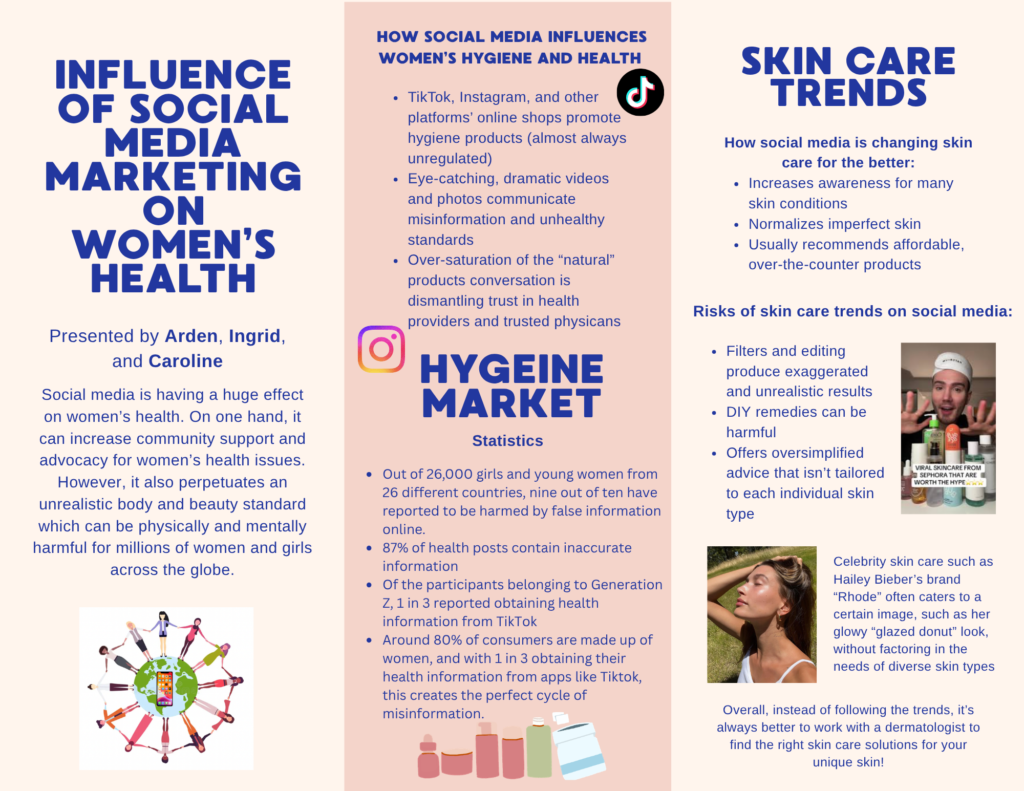
Left column of a three-part infographic titled "Influence of Social Media Marketing on Women's Health," presented by Arden, Ingrid, and Caroline. The introductory text highlights that while social media can increase community support and advocacy for women's health, it also perpetuates unrealistic body and beauty standards that can cause physical and mental harm globally. At the bottom is an illustration of diverse stylized people holding hands in a circle around a green globe with a smartphone at the center.

Column 2: Hygiene Market & Statistics
Center column featuring the TikTok and Instagram logos. The top section, "How Social Media Influences Women's Hygiene and Health," notes that online shops promote unregulated products, videos spread misinformation, and an over-saturation of "natural" product talk dismantles trust in physicians. The lower section, "Hygiene Market Statistics," lists bulleted facts over an illustration of cosmetic bottles: 9 out of 10 girls from a 26-country study reported harm from online false information, 87% of health posts contain inaccurate information, and 1 in 3 Gen Z participants obtain health info from TikTok.

Column 3: Skin Care Trends & Risks
Right column titled "Skin Care Trends." The text notes positive trends like increased awareness of skin conditions and normalized imperfect skin, but contrasts this with risks like edited filters producing unrealistic results, harmful DIY remedies, and oversimplified advice. Features two images: a screenshot of a male influencer showing viral skincare products, and a photo of Hailey Bieber looking upward. Text notes celebrity brands often cater to a specific image, like her "glazed donut" look, without factoring in diverse skin types. The column concludes by advising people to consult a dermatologist instead of following trends.

Eri Brito and Hewan Teka